
This Is Not a Bio. It's a Credibility Bridge.
He Didn't Build This System Because He Had the Answers.
He Built It Because He Was Tired of Paying the Cost of Not Having Them.
The Trudge Therapist exists because Ken got tired of looking functional on the outside while quietly drifting away underneath it.
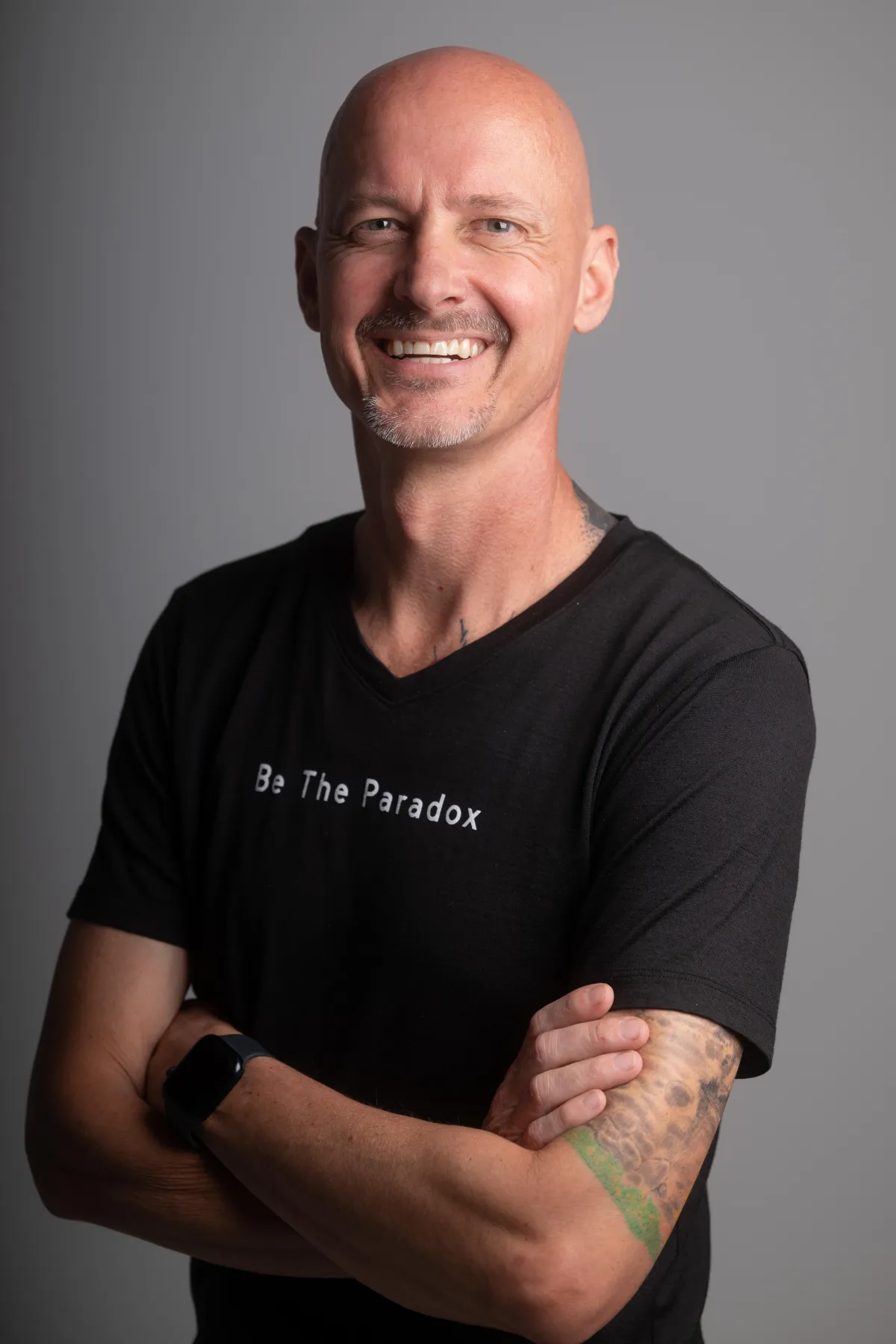
Let's Start With What Most People in This Space WON’T TELL YOU…
Most people who build something like this lead with their credentials.
The degrees. The certifications. The clients. The outcomes.
And those things matter. They’ll be here but they’re not what you need to hear first.
What you need to hear first is this:
Ken didn’t find this work. He needed it, not in a vague, relatable, marketing-copy kind of way, but in a quiet, costly, privately-unraveling kind of way.
Alcohol abuse.
Two divorces.
Career burnout.
Identity collapse.
Shame.
He knows what it feels like to carry pressure into a room—to be the one others look to for steadiness and feel something tighten underneath it all.
To hear yourself say the wrong thing… not because you don’t care, but because the pressure moved faster than your ability to stay with yourself.
He knows what it costs to look composed on the outside… while something inside is stretched thin, drifting, or slowly going silent. He knows the exhaustion of saying yes when you meant no, cleaning up after yourself, replaying conversations that didn’t need to go the way they did, and lying in bed at the end of a day that “worked”—while still feeling the quiet distance between who you showed up as and who you know you are.
And eventually, that gap between everything he loved about life and everything he hated about his life got too expensive to ignore.
Not dramatic.
Not a collapse.
Just a slow, honest realization: Something wasn’t right and no amount of pushing, fixing, or performing was going to solve it.
So he started somewhere most people don’t. He learned to listen...
Not to the noise.
Not to the pressure.
But to what was actually happening inside him (the thoughts, the tension, the reactions forming before they fully took over).
Then he had to learn to meet himself there.... Not after the fact, not once everything was cleaned up. Right there in it. Without shame, and without abandoning himself again.
Then came the harder part.
Learning to move at a different pace. Not the pace of expectation, not the pace of urgency, but the pace of guidance—where something honest could actually emerge before he acted on it.
And over time… He learned to trust, not in a blind hopeful way but in a practiced-earned way.
Trusting that if he stayed with himself long enough…
responded instead of reacted…
chose what was actually aligned instead of what was automatic…
healthy instead of what was expected… something in his life would begin to change, and it did.
Not all at once, but steadily and quietly in ways that started to matter.
He didn’t build this system because he had the answers.
He built it because he was tired of paying the cost of not accessing them.
And he built it as a practice—something repeatable, something usable, something real.
Because that’s what he needed.
Everything that follows is built on that.
There’s A Skill We Never Learn Under Pressure
Ken spent years working in environments where pressure wasn’t occasional—it was constant.
As a therapist. As a practitioner. As someone sitting across from capable adults—leaders, professionals, parents, people holding more than most—who, by every external measure, were doing well.
And yet, underneath it…
Something wasn’t lining up.
Not a breakdown.
Not a crisis.
An internal drift.
Quiet. Respectable. Easy to miss.
Full calendars. Strong reputations.
And a private internal experience that didn’t match the life they were living.
And the more he paid attention (to them and to himself) the clearer it became:
They weren’t broken.
They just didn’t know how to stay with themselves.
They had learned how to perform.
How to push.
How to show up for everything and everyone else.
But they had never been taught how to:
Listen… before the reaction took over.
Meet themselves… in the middle of pressure instead of abandoning themselves to it.
Move at a pace that allowed something honest to emerge—instead of being rushed by urgency or expectation.
Trust what they were sensing—even when it didn’t match what the outside world was asking for.
And without that…
Even strong, capable people drift.
So he looked at the systems that were supposed to help.
Therapy.
Coaching.
Motivation.
And each one had value.
But none of them were built for this.
They weren’t designed for the moment something starts to tighten…
the moment before the reaction…
the moment where everything is still adjustable.
That’s where people were losing themselves.
And that’s where the work needed to happen.
This wasn’t a motivation problem.
Motivation disappears under pressure.
This wasn’t just a mindset problem.
Insight doesn’t change behavior in real time.
And it wasn’t just a therapy problem.
Because most people weren’t in crisis — they were still trudging… functioning, even.
This was a practice problem.
A moment-to-moment skill that had never been built.
So he built one.
A structured, repeatable way to notice sooner…
stay with yourself longer…
respond more honestly…
and trust what begins to change when you do.
Not theory.
Practice.
Because that’s what was missing.

The Moment He Stopped Performing His Own Recovery
There was a specific moment — and Ken will tell you about it plainly, because he thinks the honesty in telling it matters more than the comfort of keeping it vague.
He was in a season of his life that looked, from the outside, like it was working.
Professionally grounded. Clinically trained. Helping others navigate their internal worlds with skill and care.
And privately — running the same override pattern he was helping his clients dismantle.
Alcohol abuse.
Bouts of anger.
Feeling empty.
Noticing the signals. Acknowledging them for a half-second. Pushing forward. Numbing out.
And then everything slowed down.
COVID didn’t break his life.
It interrupted it.
The pace changed.
The noise quieted.
And in that space… something uncomfortable surfaced.
He started remembering things he hadn’t thought about in years.
What he loved as a kid.
How he used to move.
What felt simple.
What felt alive.
And at the same time…
He couldn’t ignore what no longer fit.
The pace he had been keeping.
The way he was overriding himself.
The people in his life that weren’t aligned any longer with his true self.
The subtle but constant tension of living slightly out of that alignment.
It wasn’t dramatic.
It was clear.
And once he saw it… he couldn’t unsee it.
That was the moment.
Not where everything changed overnight.
But where he stopped looking away.
Where he stopped performing insight…
and started practicing something different.
He began to listen — not after the day was over, but in the moment something started to shift.
He began to meet himself there — instead of pushing past what he felt or knew.
He began to move at a pace that allowed something honest to emerge — even when it went against urgency, expectation, or habit.
And slowly, he began to trust what was unfolding… without forcing it, fixing it, or outrunning it.
Nothing about his life suddenly became easier.
But something became more real.
More aligned.
More honest.
More his.
And that’s what changed everything.
That practice became The Trudge Framework: Permission, Presence, Protection, and Peace.
His story became his gift.
His gift became his awareness.
And his awareness has become his strength.

The Training Behind the Practice
Ken brings a rare combination to this work — clinical depth, embodied practice, and a structured understanding of how real personal, ongoing, transformative change actually happens in real lifea
But here is what the credentials don’t tell you — and what Ken will tell you plainly:
The most important qualification for this work is having done it.
Not just studied it.
Not just facilitated it for others.
Not just built a framework around it.
Practiced it.
Imperfectly.
Consistently.
Under real conditions.
Over time.
That is what he brings.
And that is what this work is built on.
Licensed Therapeutic Practice
Years of clinical work with adults navigating stress, grief, burnout, identity disruption, emotional reactivity, and the quiet internal strain that often lives beneath a functional life.
Physical & Somatic Disciplines
Breathwork, PT-informed movement, yoga, Tai Chi, and nervous system-informed regulation practices that support the embodied layer of The Trudge Practice.
Structured Systems Design
The Trudge framework was built to be usable in real life — not just insightful in theory. Its structure reflects years of refining what actually helps people by noticing sooner, responding more honestly, and building self-trust over time.
Direct Leadership Context
This work has been shaped not only in clinical spaces, but in conversations with people carrying responsibility, pressure, leadership, caregiving, loss, and the demands of trying to hold life together while staying connected to themselves.
What This Work Is Built On
Most people are not broken.
They’ve just never been taught how to stay with themselves under pressure.The gap between knowing and doing is not a willpower problem.
It’s a practice problem. Structure closes it. Intention doesn’t.Calm is not something you’re born with.
It’s something you practice — and build — over time.The moment that matters most is not after the reaction.
It’s just before it.
Insight doesn’t change behavior in real time.
Practice does.This work isn’t just for when things fall apart.
It’s what changes how you show up before they do.And if something in you has been quietly telling you that…
you’re probably not wrong. healing. Governance.
Why The Trudge Therapist Exists
Not to compete with therapy.
Not to position against coaching.
Not to build a personality-driven platform around one person’s voice.
The Trudge Therapist exists because too many capable adults are living with pressure, responsibility, grief, burnout, or quiet internal drift — without ever being taught how to stay with themselves in the middle of it.
The reality is this:
You’re allowed both.
To feel ready, confident, committed, passionate… and nervous, doubtful, scattered, lost.
This work exists to help people build that practice.
A way of living where pressure and inner alignment are not treated like opposites.
Where people do not wait for breakdown or fallout to tell the truth or make the change.
Where steadiness under stress is not rare — it is practiced.
Where the space between feeling something and acting on it is no longer lost to autopilot.
That kind of life is not built all at once.
It is built slowly.
Honestly.
Through repetition.
Through self-trust.
Through learning to show up for yourself before life forces the issue.
That is what this work is for.
Slow Steps. True Healing.
This work is deliberately unhurried. It is built for people who are done with quick fixes, surface-level motivation, and constantly overriding what they already know. People who want something steady enough to hold real life. Something honest enough to meet them where they are. And something practical enough to help them live differently over time.
A Direct Word From Ken
If you’ve read this far, something in this work is likely resonating with you.
Maybe it’s the language around drift — and the quiet recognition that you’ve been living it without fully naming it.
Maybe it’s the distinction between performance and self-response — and the relief of realizing this isn’t a character flaw.
Maybe it’s even simpler than that.
Maybe you’re just tired.
Tired of overriding yourself.
Tired of cleaning up after the mess.
Tired of putting everyone else first.
Tired of knowing better and still not having something that helps in the moment that matters.
Whatever brought you here, I want to say something plainly:
I am not here because I have mastered this.
I am here because I need it too.
Every session I lead, every reset I guide, every person I walk through this practice — I am practicing alongside them.
Not from a finished place.
From a practicing one.
That is the only place from which this work feels honest to me.
I’m not going to tell you this is easy.
The practice is simple.
The commitment to it is not.
Learning to notice yourself in real time — when the pressure is real, the stakes are real, and the reflex is faster than the pause — takes work.
Quiet work.
Consistent work.
Often unglamorous work.
But what I can tell you is this:
It compounds.
Every time you learn to listen sooner, something gets clearer.
Every time you meet yourself instead of abandoning yourself, something steadies.
Every time you move from response instead of reaction, something strengthens.
Every time you trust the pause enough to use it, something in you begins to believe you again.
And over time, that matters.
Because self-trust is not built through intensity.
It is built through repetition.
Through honesty.
Through coming back.
Again and again.
That is what I’m building here.
And I’d be honored to build it with you.
The first step is seven days.
Under fifteen minutes a day.
Free.
Start there.
Let the practice speak for itself.
— Ken
“You’re allowed both. To be lost and have direction.”
This page isn’t here to impress you. It’s here to invite you into a slower, more honest way of leading yourself.

“We heal in rhythm, not in speed.” This about page is not here to impress you. It's here to invite you into a slower, more honest way of leading yourself.
Where This Work Goes
The 7-Day Reset is the beginning.
For some people, that reset is enough to create meaningful change.
For others, it becomes the first step into deeper work — more support, more structure, and more honest practice over time.
This work is designed to deepen in layers.
Not all at once.
Not through overwhelm.
But through steady, usable next steps that help you build self-trust in real life.
If this way of working resonates, there are several ways to continue:
The Trudge Path
- 7-Day Reaction Reset — a short, practical way to begin noticing sooner and responding differently.
- 21-Day Awakening Experience — deeper practice, pattern work, and guided support in community.
- 1:1 Intensive Support — weekly meetings, direct text/email access, and personalized guidance for people ready for a more personalized focus.
- Ongoing Group Support — continued practice, reflection, and reinforcement for those who want a steadier rhythm of growth over time.
This work is not built around hype, urgency, or quick transformation.
It is built around practice.
Around repetition.
Around learning how to show up for yourself more honestly and more consistently. (Than you have before).
And if what you’ve read here resonates, the first step is simple:
Start with the 7-Day Reset.
Begin With the Ten-Second Gap
Seven days. Under fifteen minutes a day. A quiet, practical reset designed for people carrying real pressure—who want to respond differently in the moments that matter.
Immediate access. No credit card. Move at your own pace.
Ken is a licensed therapist. The Trudge Therapist and The Trudge Practice are self-leadership tools — not therapy, and not a substitute for clinical mental health support. If you are in crisis or require therapeutic intervention, please seek support from a licensed mental health professional.